

Trending now
Mumbai’s 900+ Acre Reset: MHADA’s Bold Housing Shift
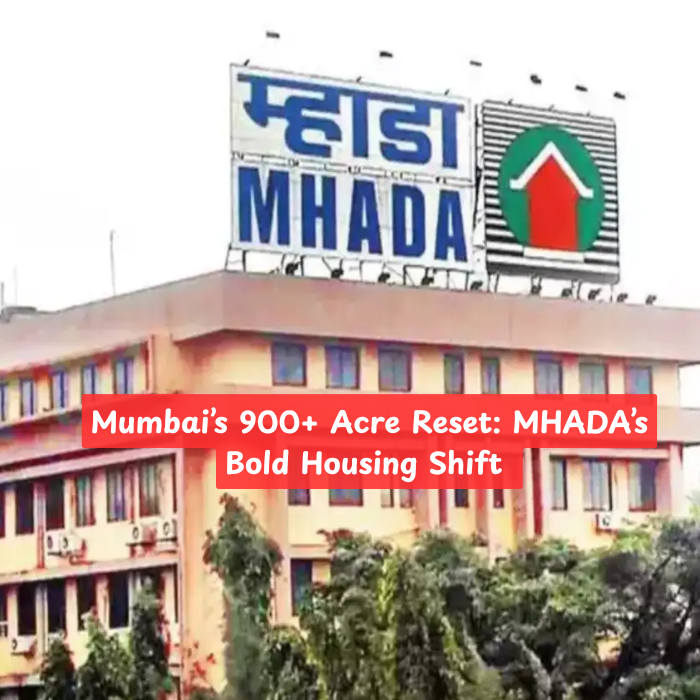
Mumbai’s housing narrative is entering a decisive phase as large-scale redevelopment moves from intent to execution. With over 900 acres under consideration, the initiative signals not just expansion, but a structural reset in how urban housing is planned, delivered, and sustained.
At the center of this transformation is MHADA’s plan to redevelop a dozen layouts spanning 923 acres, a move expected to directly impact the lives of 75,445 residents. The redevelopment is projected over a 5–10 year timeline, reflecting both the scale and complexity of the undertaking.
Sanjeev Jaiswal, vice-president and CEO, Mhada, stated that the redevelopment process is already underway in phases, with some layouts awarded and others moving through the tendering stage. Key projects such as the 250-acre Charkop layout and the 200-acre Gorai layout are expected to be placed before the state cabinet shortly for approval.
What makes this initiative significant is not just its size, but its spread across strategic urban pockets. Layouts identified include Majaswadi, Bandra Reclamation (98 acres), Abhyudaya Nagar (33 acres), SVP Nagar (29 acres), Versova, Ramakrishna Nagar (6 acres), Old MHB Colony, Borivali (26 acres), and Motilal Nagar (143 acres). Additionally, Kamathipura, a 34-acre private layout in central Mumbai, is also being taken forward with the appointment of two realtors from Pune.
From a planning standpoint, MHADA will function as the special planning authority, while execution will be carried out through a designated construction and development agency. This separation of roles points to a more structured governance framework aimed at improving delivery efficiency and accountability.
A critical layer of this redevelopment is its integration with slum rehabilitation. Eligible households will be provided 300-square-foot tenements within the same layouts, ensuring continuity of location while upgrading living conditions. However, Jaiswal highlighted the need to reassess the current in-situ rehabilitation framework, indicating that existing models may require recalibration to remain viable at this scale.
Beyond ownership housing, the policy direction is also shifting towards rental housing. As stated,
“Recently we made a presentation before the govt on rental housing. Certain amendments in the Act have been proposed, and we are in the process of setting up a state rental housing portal,” he said.
This signals a broader intent to diversify Mumbai’s housing ecosystem—moving beyond a purely ownership-driven structure towards a more balanced model that includes institutional rental solutions.
Insights
This redevelopment is less about land and more about control over Mumbai’s future urban form. With 923 acres consolidated under a structured framework, MHADA is positioning itself not just as a housing provider, but as a central urban orchestrator.
However, ambition alone will not determine outcomes. Mumbai’s redevelopment history is marked by delays, legal complexities, and fragmented execution. The real test will lie in maintaining timelines, managing stakeholder alignment, and ensuring execution discipline over a 5–10 year horizon.
The inclusion of high-value locations such as Bandra Reclamation and Versova suggests a cross-subsidy dynamic, where premium land parcels may help offset the financial burden of rehabilitation. This introduces both opportunity and risk, requiring strong regulatory oversight to maintain balance.
Equally significant is the acknowledgment that the in-situ rehabilitation model needs re-evaluation. This reflects a broader shift in thinking—one that recognises that legacy frameworks may not be sufficient for projects of this scale and complexity.
The push towards rental housing stands out as a forward-looking policy move. If implemented effectively, it has the potential to reshape affordability, increase housing flexibility, and support a more mobile urban workforce.
Ultimately, this is not just a redevelopment exercise—it is a city-scale policy experiment. The intent is ambitious, the scale is undeniable, but the outcome will depend on whether execution can keep pace with vision.
Mumbai doesn’t lack land it has long lacked execution. This time, the city will be watching if intent finally translates into delivery.
By Sana Khan
Executive Editor, Realty Quarter
Mumbai






Our Esteem Clients:



























































Channel Partner Associations:





















Our Partners:


















Our Supporters: