
Trending now
Dharavi Redevelopment Picks Pace with 11,000 Rehab Units Planned
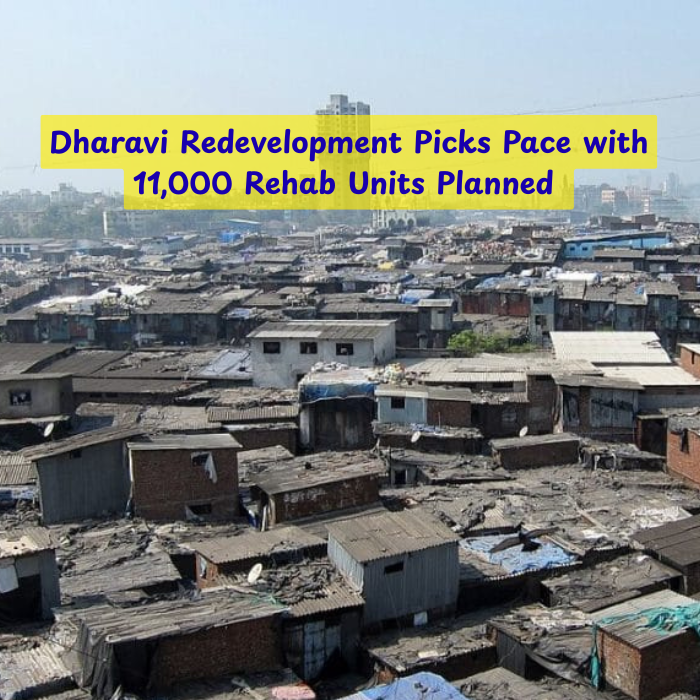
Mumbai’s redevelopment landscape is witnessing a significant shift as the Dharavi Redevelopment Project (DRP) moves into an accelerated execution phase. What has long remained a complex urban challenge is now progressing with clearer timelines, defined clusters, and structured rehabilitation planning.
A major focus of this phase is Sector-6, situated on a 35-acre railway land parcel in Matunga. Authorities have initiated groundwork by urging residents to cooperate and vacate their homes, enabling the start of construction for rehabilitation buildings.
The first phase will deliver 11,000 tenements of 350 sq ft each, reflecting a substantial step toward addressing housing needs within Dharavi. However, the presence of existing settlements on land originally considered readily available has led to a phased evacuation approach, adding layers of operational complexity.
The project is being executed through a public-private partnership model, where an Adani Group entity holds an 80% stake in NMDPL, while the Maharashtra government retains 20%, ensuring a blend of private execution capability and public oversight.
Key clusters including Ganesh Nagar-Meghwadi, SVP Nagar, Azad Nagar A & B, Azad Nagar C, and Kamala Raman Nagar have been identified for early clearance. This phased unlocking of land is aimed at enabling multiple construction fronts simultaneously, thereby improving delivery timelines.
Authorities have advised residents to vacate their tenements before the onset of the monsoon or the new academic year to minimize disruption. As one DRP official stated, “Early vacating will enable multiple construction fronts to open up and ensure faster delivery of rehabilitation homes.”
To support affected residents, a structured transition framework has been introduced. Individuals are being offered options of transit accommodation or rental housing. A one-time shifting allowance of Rs 5,000 has been provisioned, while those opting for rental support will receive assistance with a 5% annual increment until permanent homes are allotted based on eligibility.
Insights
The larger narrative extends beyond redevelopment—it is a test of execution under real-world constraints such as land availability, human displacement, and strict timelines. While the policy framework appears robust and intent-driven, the true measure of success will lie in how efficiently authorities manage the balance between accelerated construction and humane rehabilitation. Sustainable progress in Dharavi will depend not just on speed, but on ensuring that transition remains inclusive, structured, and socially sensitive.
By Sana Khan
Executive Editor, Realty Quarter
Mumbai






Our Esteem Clients:








































Channel Partner Associations:


















Our Partners:
















Our Supporters: