
Trending now
Dharavi Redevelopment to Shape Mumbai’s Next Phase of Urban Growth
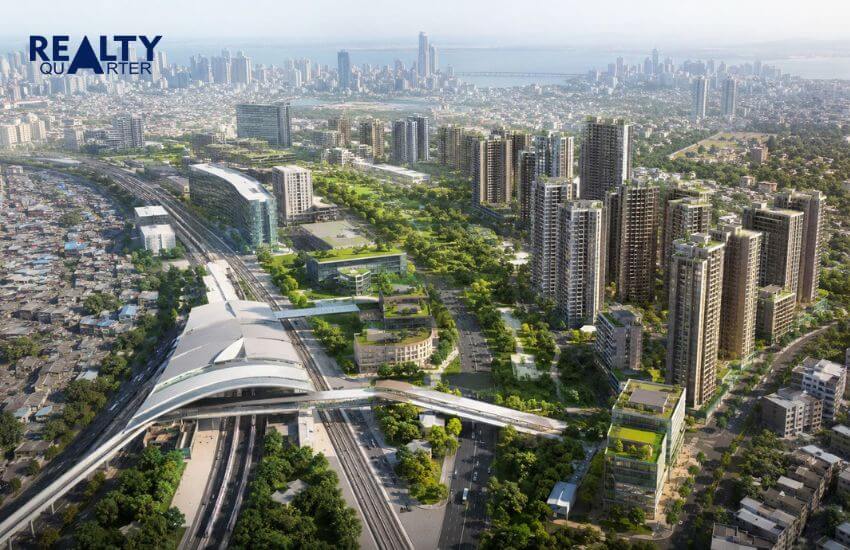
Mumbai Chief Minister Devendra Fadnavis has announced a series of major urban renewal and housing initiatives, with the Dharavi Redevelopment Project emerging as the centrepiece of the state’s redevelopment agenda. Envisioned as an economic transformation programme as much as a housing initiative, the project aims to modernise infrastructure, strengthen connectivity and generate employment opportunities. The government has stated that nearly 10,000 houses under the first phase will be completed within the next 18 months, while broader redevelopment measures, including cluster-based planning and new transport infrastructure, are expected to reshape Mumbai’s urban landscape. The administration has also set an ambitious target of constructing 7.8 lakh houses across the Mumbai Metropolitan Region by 2030.
Dharavi at the Centre of Urban Renewal
Addressing the Legislative Assembly, Fadnavis described the Dharavi Redevelopment Project as far more than a conventional housing scheme, positioning it as a catalyst for economic transformation and large-scale urban renewal. He reiterated that eligible residents will be rehabilitated within Dharavi, while those falling outside the eligibility criteria will be accommodated at nearby locations, ensuring that communities remain connected to existing social and economic networks.
The Dharavi Redevelopment Project seeks to transform Asia’s largest informal settlement into a modern, transit-oriented district while preserving its thriving local economy and small-scale industries. The redevelopment initiative commenced in January 2025 and has been envisioned as a long-term urban regeneration programme for central Mumbai.
Fadnavis said the project envisages approximately 95 million square feet of development, integrating residential spaces, commercial activity and employment opportunities within a single ecosystem.
He further stated that all eligible beneficiaries would receive 350 sq ft homes within Dharavi. Residents covered under the extended 2011 eligibility criteria would also be rehabilitated upon payment of the prescribed amount of Rs 2.5 lakh, while ineligible occupants would be provided alternative housing at nearby locations.
Cluster Redevelopment Across Mumbai
Highlighting broader redevelopment efforts, the chief minister said the government has identified 19 cluster redevelopment projects across Mumbai as part of its strategy for planned urban growth.
According to him, work on the first redevelopment cluster is already underway. The cluster model, he noted, is expected to facilitate the renewal of ageing buildings, improve civic infrastructure and create better living conditions without compromising open spaces.
Infrastructure and Mobility Push
Fadnavis said the underground tunnel connecting north Mumbai with south Mumbai is expected to provide signal-free connectivity and substantially reduce travel time to the city’s commercial districts. The project is slated for completion by October 2027 and is expected to ease congestion on key arterial roads.
Addressing the city’s parking challenges, he said an underground robotic parking plaza with capacity for 640 cars and 112 two-wheelers is under development, while another underground parking facility has been proposed. The government is also examining advanced parking technologies adopted internationally for possible implementation in Mumbai.
Strengthening Civic and Healthcare Infrastructure
On waste management, the chief minister said the Brihanmumbai Municipal Corporation has initiated waste-to-energy projects aimed at scientifically processing municipal waste and reducing dependence on dumping grounds. He added that adequate financial provisions have already been made for these projects.
Drawing lessons from the COVID-19 pandemic, Fadnavis emphasised the need to strengthen Mumbai’s healthcare infrastructure. The government, he said, is working to add nearly 8,000 hospital beds and has introduced an integrated Hospital Management Information System (HMIS), enabling digital access to patients’ treatment records across healthcare facilities.
Housing Targets and Technology-Led Governance
The state government has set a target of constructing 7.8 lakh houses across the Mumbai Metropolitan Region by 2030. Of these, construction on more than 2.39 lakh houses has already commenced, while plans for another 5.43 lakh houses are at various stages of implementation.
Fadnavis also highlighted several technology-driven governance initiatives undertaken by the BMC, including the MyBMC grievance platform, WhatsApp-based citizen services and the development of a digital twin of Mumbai using aerial photography, GIS mapping, cadastral surveys and 360-degree imaging to strengthen urban planning and civic administration.
The scale of the Dharavi Redevelopment Project, coupled with Mumbai’s wider infrastructure and housing agenda, reflects the government’s attempt to reshape the city’s urban landscape through integrated planning, improved connectivity and technology-enabled governance. The success of these initiatives, however, will ultimately depend on timely execution, transparent rehabilitation and the creation of sustainable economic opportunities for residents.
At a time when Mumbai is undergoing rapid redevelopment and infrastructure expansion, projects such as Dharavi are expected to redefine the relationship between housing, employment and urban mobility. The long-term success of these initiatives will depend not only on construction timelines and investment commitments but also on the ability to deliver inclusive growth, preserve existing communities and create sustainable opportunities for future generations. With its emphasis on integrated planning, rehabilitation and economic development, the Dharavi Redevelopment Project has the potential to become a benchmark for large-scale urban transformation in India.
Closing Insights
The Dharavi Redevelopment Project represents one of the most ambitious urban renewal exercises undertaken in India, extending beyond housing to encompass employment generation, infrastructure modernisation and social transformation. With 95 million square feet of planned development, 19 redevelopment clusters, and a housing target of 7.8 lakh units across the Mumbai Metropolitan Region by 2030, Maharashtra is positioning redevelopment as a key pillar of its growth strategy.
As Mumbai continues to expand, the challenge will not merely be to build new structures but to create inclusive, resilient and future-ready communities that balance economic progress with the needs of existing residents.
By Sana Khan
Executive Editor,
Realty Quarter – Mumbai





Our Esteem Clients:






















Channel Partner Associations:











Our Partners:










Our Supporters: