

Trending now
Bombay HC Seeks Clear Rules on Home Alterations
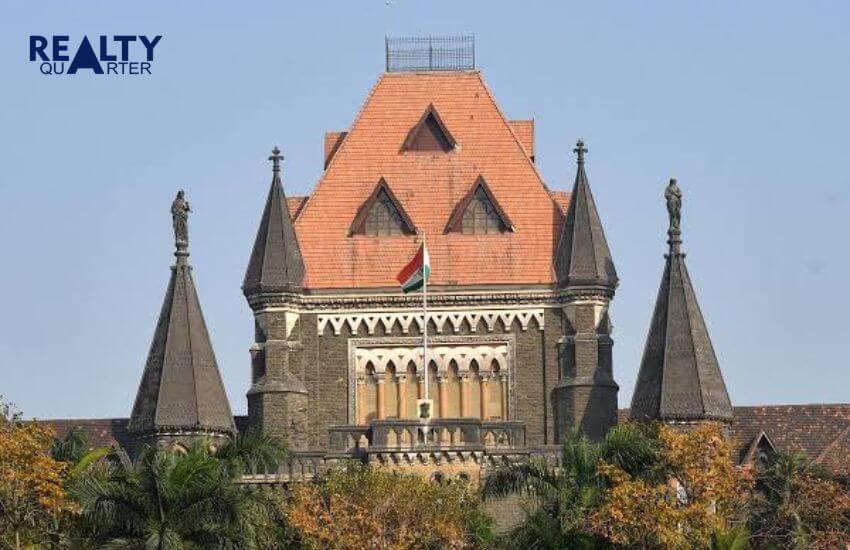
Observing the growing number of unauthorised modifications in residential buildings, the Bombay High Court has directed the Maharashtra government to formulate comprehensive guidelines defining the kinds of alterations that can legally be undertaken in flats and housing societies. The court also instructed the Panvel Municipal Corporation (PMC) to take immediate action against unauthorised constructions identified in a residential building in Kalamboli.
In its July 16 ruling, the division bench of Justices A.S. Gadkari and Kamal Khata underscored the need for uniform enforcement of municipal laws, while cautioning against the normalisation of illegal alterations.
“There cannot be two classes of citizens: those who obey the law and those who openly disregard it. Nor can the law be enforced selectively against only those whose violations are reported, while other illegalities are allowed to continue merely because no objections have been raised,” the bench observed.
Court Flags Rising Trend of Illegal Modifications
The High Court noted that unauthorised constructions within residential premises have become increasingly common and often continue because of civic inaction or what it termed “apparent official acquiescence”.
“This is indeed a regrettable state of affairs,” the bench said, questioning why law-abiding citizens should comply with regulations when “unabashed” illegalities “continue unabated” due to ineffective action and are “also facilitated” by status quo orders issued by civil courts.
The observations came while hearing a petition filed in 2024 seeking demolition of unauthorised structures allegedly created by a flat owner in Kalamboli under the guise of renovation. According to the petitioner, the alterations included breaking walls and enclosing open spaces without civic permissions, adversely affecting the building’s structural stability.
The petitioner further argued that despite complaints being lodged since 2019, no action had been taken by the managing committee of the housing society.
Dispute Over Terrace Enclosure
The civic body admitted that the enclosure of open terraces was unauthorised and had been demolished in 2021. However, the flat owner later sought permission, erected a temporary shed and obtained a status quo order from a trial court in October 2022.
Defending his position, the flat owner claimed that the modifications had been carried out by the previous owner and argued that he was unaware of their legal status. He also contended that “most people” had enclosed terraces and that he was “being singled out unfairly”.
The court observed that homeowners frequently install protective grills, sheds or enclose terraces, while some alter internal partitions using wooden or gypsum sheets. It noted that such modifications often begin even before the Occupancy Certificate is granted, leading to disputes and delays.
“There appears to be no clear or readily accessible and economical procedure governing the grant of permission for such works,” the bench said.
Need for a Transparent Framework
Highlighting the absence of clear procedures, the High Court acknowledged that many residents choose unauthorised alterations because obtaining approvals is often complex and inaccessible.
“This cannot and does not justify the illegality, but it highlights the need for a transparent and workable regulatory mechanism,” the judgment authored by Justice Gadkari stated.
The bench further emphasised that the proposed regulatory framework must distinguish between alterations that merely affect the appearance of a property and those capable of compromising structural safety.
According to the court, the framework “must distinguish between alterations, which do not affect the structural stability or safety of the building and alterations capable of structurally weakening the building, endangering its occupants.”
Equal Enforcement of Municipal Law
While directing action against the concerned flat owner, the High Court instructed the Panvel Municipal Corporation to identify and proceed against all similar unauthorised constructions.
“Law must operate equally against all persons. Unless and until an appropriate regulatory framework is introduced, every construction or alteration carried out without the permission required by the existing law must be dealt with in accordance with law.”
The court further directed that “Municipal law must be applied uniformly and equally to all concerned.”
The ruling goes beyond a dispute involving a single apartment in Kalamboli and raises larger questions about urban governance, enforcement gaps and the growing trend of informal modifications in residential complexes. As cities continue to expand vertically and housing patterns evolve, the challenge before authorities lies not only in preventing illegal constructions but also in creating a practical, transparent and affordable approval system for residents.
Closing Insights
The Bombay High Court’s observations reflect a broader concern confronting urban India—how to balance individual housing needs with structural safety and regulatory compliance. While the court has made it clear that unauthorised alterations cannot be tolerated, it has simultaneously acknowledged the absence of simple and accessible mechanisms for obtaining permissions.
The direction to frame comprehensive guidelines could pave the way for a more predictable regulatory framework, ensuring that homeowners, housing societies and civic authorities operate within clearly defined boundaries while safeguarding the integrity of residential buildings.
By Sana Khan
Executive Editor,
Realty Quarter – Mumbai







Our Esteem Clients:



























































Channel Partner Associations:





















Our Partners:


















Our Supporters: