
Trending now
Pranav Constructions IPO Puts Mumbai’s Redevelopment Market In Focus
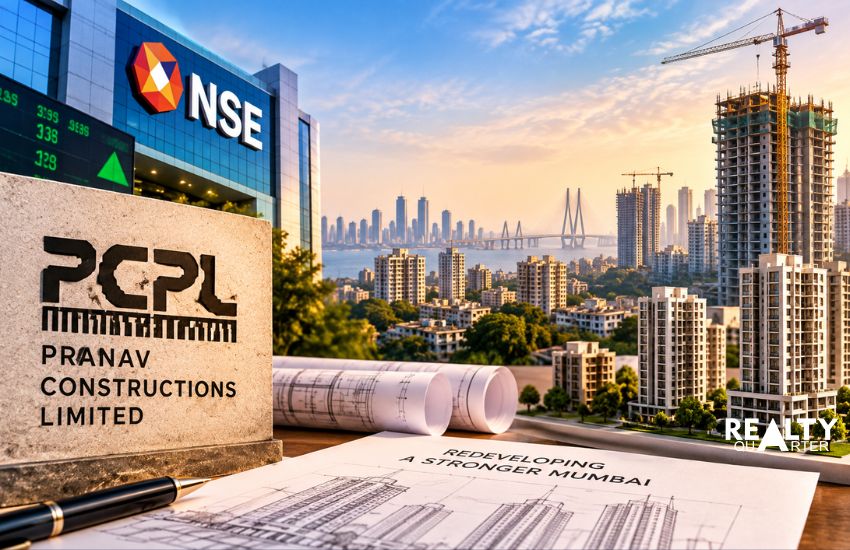
The developer’s September 15 listing comes as redevelopment becomes an increasingly important way of creating new housing within Mumbai’s established neighbourhoods.
MUMBAI: Mumbai’s redevelopment market is gaining a new dimension as developers with large pipelines of society redevelopment projects increasingly build businesses around the transformation of the city’s ageing housing stock.
The latest example is Pranav Constructions, which made its stock-market debut on September 15, 2026. The company listed on the NSE at ₹165 per share, against its IPO issue price of ₹124. Its initial public offering raised ₹351.03 crore.
The listing is the immediate news event. The larger real-estate significance lies in the company’s redevelopment portfolio and the market in which it operates.
Company Facts : What Pranav Has Disclosed
As of March 31, 2026, Pranav Constructions had a portfolio of 65 redevelopment projects across the MCGM region. Of these, 28 projects had been completed, 20 were under construction and 17 were in the upcoming stage. Together, these projects represented approximately 5.01 million sq ft of developable area, based on the company’s disclosed figures.
The March 31 date is important. The 65-project figure describes the company’s portfolio at that point in time; it should not be interpreted as 65 projects being added around the September stock-market listing.
The company’s business is predominantly focused on redevelopment of existing residential properties in Mumbai, making its public-market debut relevant to a segment that is becoming increasingly important in the city’s real-estate cycle.
What The Under Construction Portfolio Shows
The company’s 20 under-construction projects provide a closer look at how redevelopment works at the project level.
According to a September 2026 analysis by JM Financial, these projects comprised 1,207 units. Of these, 596 were intended for existing society members, while 611 were planned as saleable homes.
This division is central to the redevelopment model. Existing residents need replacement homes in the redeveloped building, while the additional development potential can create homes that are subsequently sold in the market.
The same project therefore serves two different housing requirements — rehabilitation for existing residents and new housing supply for buyers.
The Cost Of Redevelopment
Redevelopment also involves costs that arise before a new building is completed.
According to the company’s IPO disclosures, the funds raised are intended for requirements including regulatory approvals, additional FSI purchases, alternate-accommodation compensation and hardship compensation, as reported by Mint.
These expenses highlight an important difference between redevelopment and construction on vacant land.
A developer undertaking redevelopment is not starting with an empty site. There are existing residents, existing structures, society agreements and a transition period during which occupants have to be accommodated while construction takes place.
The Resident Impact
For Mumbai’s existing society members, the most important part of redevelopment is not the developer’s IPO or its stock-market valuation.
It is what happens to their home.
Residents are directly concerned with the carpet area of the replacement flat, rehabilitation terms, temporary accommodation, rent or compensation, shifting expenses, construction timelines and possession.
This makes redevelopment fundamentally different from purchasing a flat in a conventional new project.
A new-home buyer enters a project as a purchaser. An existing society member enters redevelopment with rights connected to a home that already exists.
Pranav’s disclosed expenditure categories include alternate-accommodation and hardship compensation, showing that the transition of existing residents forms part of the financial structure of its redevelopment business.
For residents, therefore, the success of redevelopment is ultimately measured through practical outcomes: whether promised replacement homes are delivered, whether agreed terms are honoured and whether the transition is managed in accordance with the applicable agreements and regulations.
Mumbai’s Bigger Redevelopment Story
Pranav’s business is part of a much wider transformation in Mumbai’s property market.
A JLL–NAREDCO analysis reported that more than 1,000 redevelopment projects had been launched in Mumbai since 2020. The analysis also found that redevelopment projects accounted for around 15% of residential sales in 2025 and the first half of 2026, compared with approximately 6% during 2016–2021.
These figures describe Mumbai’s broader market and should not be attributed specifically to Pranav Constructions. They nevertheless provide context for the company’s redevelopment-focused business model.
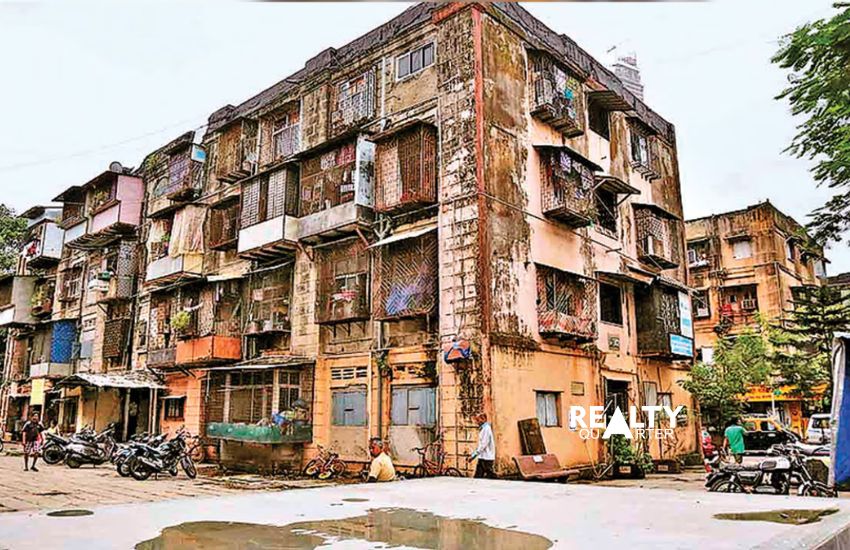
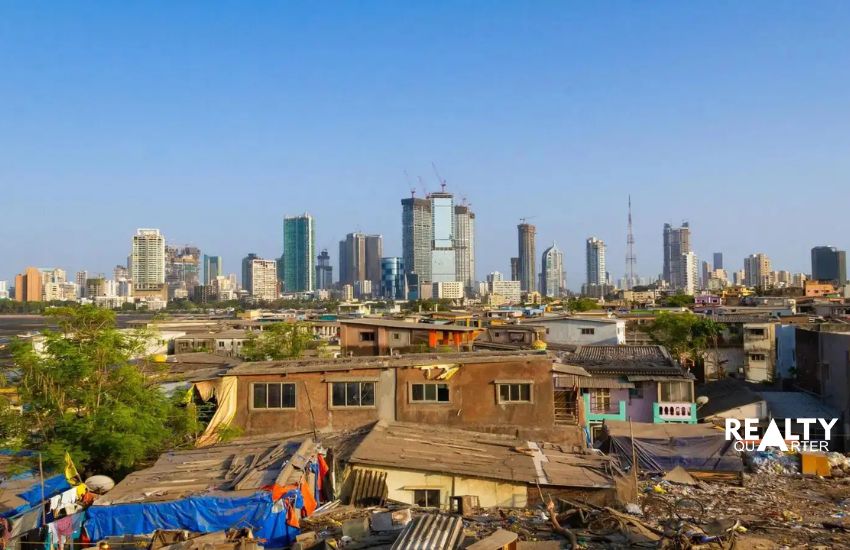
In many established parts of Mumbai, large vacant land parcels are difficult to assemble. At the same time, older residential buildings occupy valuable land in neighbourhoods that already have transport connections, employment centres, schools, commercial activity and civic infrastructure.
Redevelopment provides a way to replace ageing structures while retaining those established locations.
Why Developers Are Looking At Existing Housing Stock
For developers, redevelopment can provide access to locations where acquiring a comparable vacant parcel may be difficult.
But the opportunity comes with additional responsibilities. A redevelopment project can involve negotiations with a housing society, agreements with residents, regulatory approvals, transit arrangements and additional development rights. The developer then has to construct the new building and deliver the rehabilitation component before the project reaches its final stage.
This makes redevelopment a more complex development model than simply acquiring an empty plot and constructing a building.
The growing presence of developers with large redevelopment pipelines also reflects the increasing importance of specialised redevelopment capabilities in Mumbai’s real-estate sector.
What It Means For The City
For Mumbai, the significance goes beyond individual developers.
Redevelopment can create new homes without requiring the city to find entirely new land. It can also replace ageing buildings and provide an opportunity to improve building-level and, in larger projects, neighbourhood-level infrastructure.
But the number of new units created is not the only measure of its impact.
The city also has to consider how existing residents are rehabilitated, what additional housing is created and whether redevelopment contributes homes across different affordability segments.
A large redevelopment pipeline therefore represents potential housing supply, rather than an immediate addition to the city’s available homes.
From Ageing Buildings To A New Development Model
Pranav Constructions’ September listing provides a timely example of how redevelopment has become a substantial business within Mumbai’s property market.
The company entered the listed market with a portfolio that, as of March 31, 2026, comprised 65 redevelopment projects at different stages.
Pranav’s portfolio shows the scale at which one redevelopment-focused developer is operating, while the wider Mumbai figures indicate the growing role of redevelopment across the city’s housing market. For Mumbai, this means redevelopment is increasingly becoming a route to adding housing within established parts of the city.
As the city faces limited availability of large vacant parcels in established areas, its future housing supply may increasingly come not only from new land but from rebuilding the homes Mumbai already has.
For developers, that creates a significant development opportunity. For residents, however, redevelopment is not simply about a new tower replacing an old building. It is about securing a new home, managing the transition out of the existing one and ensuring that the promises made at the beginning of the process are reflected in the finished project.
Tags: 1207 units Pranav Constructions, 5.01 million sq ft developable area, 596 rehabilitation units, 611 saleable homes, 65 redevelopment projects, additional FSI redevelopment, alternate accommodation compensation, hardship compensation, JLL NAREDCO redevelopment, MCGM redevelopment projects, Mumbai housing supply, Mumbai property market, Mumbai redevelopment, Mumbai residential real estate, Mumbai society redevelopment, Pranav Constructions IPO, Pranav Constructions listing, Pranav Constructions NSE, Pranav Constructions redevelopment, Pranav Constructions share price, redevelopment developers Mumbai, redevelopment housing Mumbai, redevelopment market Mumbai, rehabilitation homes Mumbai, saleable units redevelopment, ₹351.03 crore IPO






Our Esteem Clients:



















































Channel Partner Associations:





















Our Partners:
















Our Supporters: