

Trending now
Vertical Slums, Silent Crisis
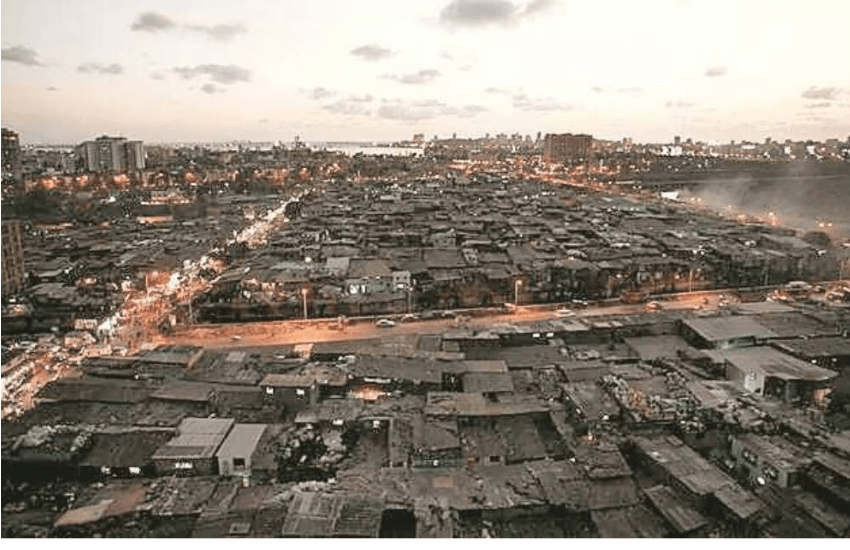
Mumbai’s growth story is no longer horizontal—it is rising vertically, quietly and without control. Across pockets like Govandi, Kurla, and Bandra East, informal settlements are no longer limited to ground-plus-one structures. They are evolving into multi-storey, unauthorized buildings—what many now call “slum skyscrapers.”
This transformation is not just physical; it reflects a deeper imbalance between urban demand and governance capacity.
At first glance, it may appear to be a case of illegal construction. But the issue runs far deeper. These vertical expansions are placing an unprecedented burden on Mumbai’s already fragile infrastructure—particularly water supply, sewage systems, and sanitation networks that were never designed for such density.
Civic activist Zoru Bathena points to areas near Juhu Tara Road, where traditional shanties have gradually turned into four-storey structures. Despite repeated complaints, enforcement has remained inconsistent. As he observed, “The BMC took action and work stopped for a few days, but later the floors rose anyway.”
This pattern reveals a critical gap—temporary action without long-term control.
Urban planners are now raising alarms about the invisible consequences of this unchecked growth. “We can’t consider it solely an issue of illegal construction; this is an immense strain on drinking water and sewage systems,” a former town planner explained. The crisis, therefore, is not just about legality—it is about sustainability.
The numbers further expose the mismatch. Civic calculations assume an average of five people per family unit. However, with structures rising up to five storeys, the actual population density far exceeds these estimates. Whether these additional floors are used for overcrowded housing or informal commercial activities, the result is the same—excessive consumption and overburdened systems.
This silent overload is pushing the city closer to a potential infrastructure breakdown.
Policy contradictions only worsen the situation. While authorities acknowledge encroachments and initiate mapping exercises, regulatory timelines continue to shift. “After every election, the cut-off date for slum rehabilitation extends for upto five years.” Such extensions dilute accountability and indirectly encourage further unauthorized construction.
Even rehabilitation efforts are struggling to deliver sustainable outcomes. “The Slum Rehabilitation Authority (SRA), which was established with the objective of rehabilitating slum dwellers, has regrettably failed to achieve its intended goals.” More concerning is the recurring trend: “There are numerous instances where beneficiaries, after being duly allotted rehabilitation flats, sell them within the stipulated 10-year no-sale period and return to residing in slums,” said civic activist Godrey Pimenta.
This reflects a fundamental flaw—rehabilitation without retention.
Additionally, “slum structures have increasingly expanded vertically, in some cases up to four floors, with little to no regulatory oversight.” The lack of continuous monitoring has allowed this pattern to accelerate, placing severe strain not just on water and sewage, but also on waste management systems.
Mumbai today stands at a critical juncture. The rise of vertical slums is not a solution to housing scarcity—it is a symptom of deeper structural inefficiencies.
Insights
Mumbai’s vertical slum expansion is not an isolated irregularity—it is a warning signal of systemic fatigue. When informal growth begins to outpace formal planning, the risk extends beyond slums and into the city’s entire ecosystem.
The real issue is not how high these structures rise, but how long the systems beneath them can sustain the pressure. Water shortages, sewage overload, and unregulated density are no longer distant threats—they are present realities.
What Mumbai urgently needs is consistent enforcement, accountable policy implementation, and rehabilitation models that ensure long-term stability. Because if growth continues without structure, the city will not collapse overnight—it will weaken silently, layer by layer.
And by the time the cracks become visible, the damage may already be irreversible.
By Sana khan
Executive Editor, Realty Quarter
Mumbai







Our Esteem Clients:



























































Channel Partner Associations:





















Our Partners:


















Our Supporters: