

Trending now
Thane Data Centre Faces Local Opposition
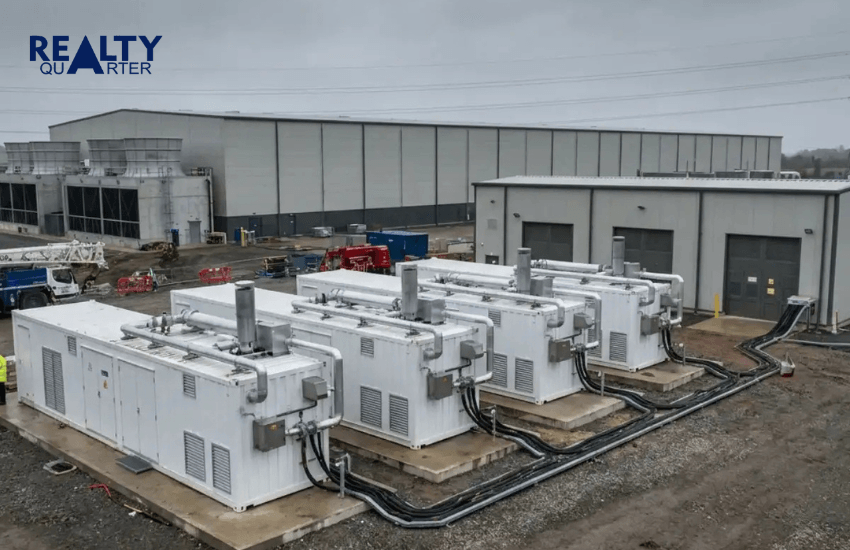
Residents of Thane have intensified their opposition to Amazon’s proposed data centre in Balkum, raising concerns over its environmental impact, water consumption and electricity requirements. The protest highlights the growing challenge of balancing large-scale digital infrastructure projects with the interests of local communities and urban sustainability.
Several hundred people staged a demonstration against the project, alleging that the facility would create noise pollution, put pressure on civic resources and adversely affect the surrounding neighbourhoods. Amazon, however, maintained that the project complies with all environmental regulations and will not rely on local sources of water and electricity.
Concerns Over Resources and Environment
Residents from Balkum, Kolshet and Dhokali claimed that the data centre, planned on a 53-acre site, would require at least 12 million litres of water every day in addition to “unlimited electricity”.
The protesters further alleged that the facility could generate continuous noise and pose health concerns, particularly because several residential complexes, five schools and three hospitals, including a children’s hospital, are located within a one km radius of the site.
The concerns reflect a broader debate unfolding across urban India, where rapidly expanding digital infrastructure projects increasingly intersect with questions of environmental sustainability, resource allocation and public consultation.
Residents Seek Review of Approvals
A delegation of protesters under the banner of ‘Wake Up Thanekar’ met the Thane Municipal Commissioner and representatives of Amazon on Thursday. According to the protesters, the discussions failed to produce a satisfactory resolution.
Earlier this month, Thane MP and Shiv Sena leader Naresh Mhaske demanded that construction on the project be halted, citing objections from local residents and concerns over alleged large-scale tree felling.
In a letter to the Thane Municipal Commissioner, Mhaske called for an independent expert committee to review all permissions granted to the project. He also sought a detailed public hearing and a joint meeting involving residents, specialists and public representatives to address local grievances.
Amazon Defends the Project
Responding to the allegations, an Amazon spokesperson stated that the company’s proposed facility would operate independently of the local electricity network.
The spokesperson said the data centre “will not draw or divert power from the local distribution grid that serves residential and commercial consumers, but through its own dedicated high-voltage substation, planned in coordination with the utility.”
Addressing concerns over water consumption, the company said it had recently achieved a “water positive” status in India by replenishing more water than it consumes.
“Amazon does not currently use water for cooling in its data centers in India, including our Thane site, and we do not draw from the community’s drinking or potable water for cooling purposes,” the statement said.
The company also defended the removal of trees at the project site, stating that the exercise was carried out in accordance with legal requirements.
“For every tree removed, we are planting more native trees on the site,” the spokesperson said.
Digital Growth Meets Local Concerns
The dispute surrounding the proposed Thane facility underscores the complex relationship between India’s rapidly expanding digital economy and the environmental realities of urban development. Data centres have emerged as critical infrastructure supporting cloud computing, artificial intelligence and digital services, but their growing footprint has also triggered demands for greater transparency regarding resource consumption and ecological impact.
As metropolitan regions compete to attract technology investments, policymakers and developers may increasingly face pressure to ensure that economic growth is accompanied by public engagement and sustainable planning.
As India positions itself as a major destination for data centres and digital infrastructure investments, projects of this scale are likely to become increasingly common across metropolitan regions. Their long-term success, however, will depend not only on technological capability and regulatory approvals but also on the ability of developers and authorities to build public trust through transparency and meaningful community engagement.
Closing Insights
The controversy over Amazon’s proposed data centre extends beyond a local dispute over land use. It reflects a broader conversation about how cities should accommodate the infrastructure required for an increasingly digital economy while safeguarding environmental interests and community welfare.
The outcome of the Thane project could shape future discussions on data-centre development in India, particularly as governments, corporations and residents seek to strike a balance between technological progress and sustainable urbanisation.
By Sana Khan
Executive Editor,
Realty Quarter – Mumbai







Our Esteem Clients:



























































Channel Partner Associations:





















Our Partners:


















Our Supporters: