
Trending now
Maharashtra Proposes New Housing Society Rules: Redevelopment, Parking & EV Charging in Focus
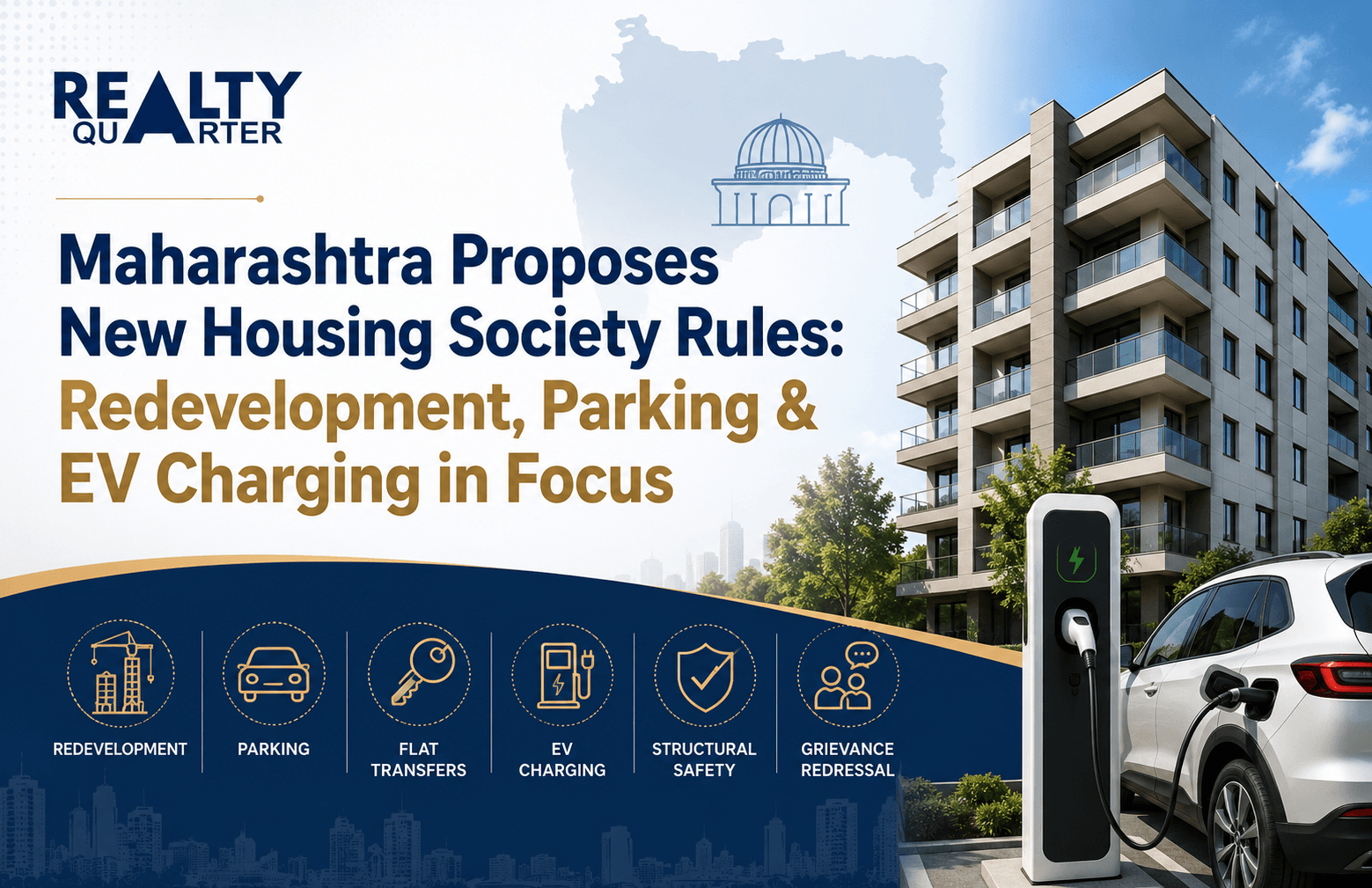
MUMBAI: Maharashtra has proposed a fresh set of Model Bye-Laws for cooperative housing societies, bringing redevelopment, parking, flat transfers, electric vehicle (EV) charging, structural safety and grievance redressal into sharper focus.
The draft Model Bye-Laws 2026 for Co-operative Housing Societies — Tenant Co-partnership (Flat Type) have been released by the state Cooperation Department for public suggestions and objections. The proposed framework is expected to apply to more than 1.25 lakh housing societies across Maharashtra.
A key reason behind the proposed revision is the changing nature of housing societies and the need to align their functioning with legal, civic and technological developments. The existing model bye-laws were last revised in 2014, and officials said the older framework had not kept pace with these changes.
Redevelopment and everyday housing issues in focus
For residents, some of the most significant areas covered by the draft relate directly to everyday society management. Redevelopment, parking arrangements, transfer of flats and provisions for EV charging are among the subjects addressed in the proposed framework.
The inclusion of structural safety and grievance redressal also indicates a wider attempt to strengthen the way housing societies handle both building-related concerns and disputes involving residents.
The draft was prepared after the rules under the relevant Act were finalised. It was subsequently placed in the public domain following a meeting convened by Cooperative Commissioner Deepak Tawre.
Tawre told TOI that the draft has been published on the department’s website and urged citizens to study the provisions and submit their views.
“Citizens should examine it and give their suggestions and objections, if any, before Aug 27,”
The suggestions and objections will be considered before the draft is placed before the government for finalisation.
Why the revision matters
With redevelopment becoming an increasingly important issue for ageing housing societies, while EV adoption and parking pressures continue to reshape residential requirements, the proposed bye-laws could have a direct impact on how societies function in the coming years.
The revision also reflects a broader need for housing society regulations to keep pace with changing urban realities rather than relying on rules framed more than a decade ago.
For thousands of residents, therefore, the draft is not merely an administrative update. Its final provisions could influence decisions involving redevelopment, parking, ownership transfers, safety and day-to-day society governance.
By Sana Khan
Executive Editor,
Realty Quarter
Mumbai
Tags: #Mumbai Real Estate News, cooperative housing society Maharashtra, Draft Model Bye Laws Maharashtra, EV charging housing society, flat transfer rules, housing society bye laws, Housing Society Governance, housing society grievance redressal, housing society parking rules, housing society redevelopment rules, housing society structural safety, Maharashtra cooperative housing societies, Maharashtra housing society rules, Maharashtra property news, Maharashtra real estate news, Model Bye Laws 2026, Mumbai housing society rules, realty quarter, society redevelopment Maharashtra, society rules 2026







Our Esteem Clients:



























































Channel Partner Associations:




















Our Partners:


















Our Supporters: