Trending now
Dwarka Expressway’s Evolving Residential Landscape: How Design and Changing Lifestyles Are Shaping the Future of Urban Living
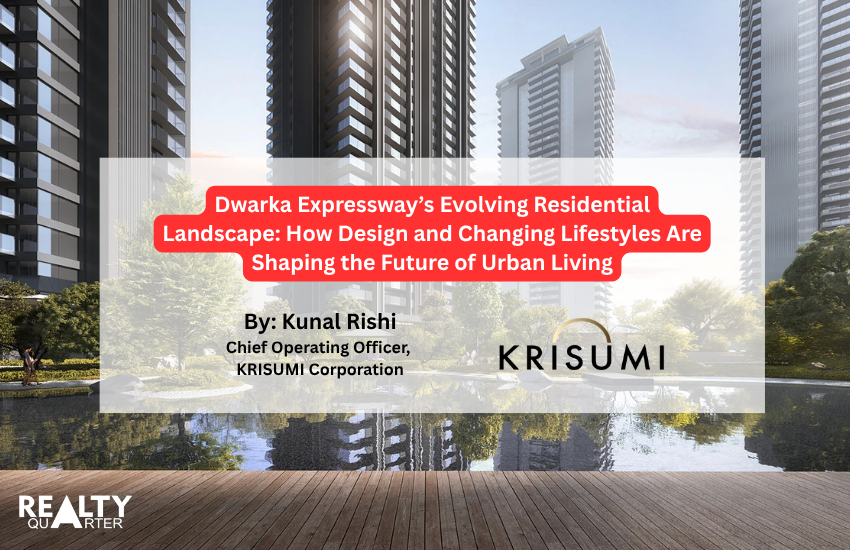
By: Kunal Rishi, Chief Operating Officer, KRISUMI Corporation
For years, Dwarka Expressway’s appeal rested on its promise of better connectivity between Delhi and Gurugram. As the infrastructure took shape, homebuyers and developers were drawn to the corridor, keen to make the most of its strategic location. Today, with the expressway operational and residential development gaining momentum, the conversation has taken a different turn. The question is no longer how well a place is connected, but what makes a home comfortable, practical and in step with the way people want to live.
This change mirrors a wider trend in NCR’s housing market, where buyers want much more than a well-connected address. Spacious layouts, natural light, green surroundings, privacy and easy access to everyday conveniences now matter a great deal. For developers, that is a real opportunity to build communities that keep pace with changing lifestyles, rather than simply adding more premium homes to an emerging corridor.
Changing Buyer Preferences
The corridor’s market trajectory reflects the scale of this transformation. According to ANAROCK Research’s September 2026 report, average residential prices along Dwarka Expressway rose approximately 135 per cent, from ₹6,032 per sq. ft. in 2021 to ₹14,180 per sq. ft. in the first half of 2026. This places the corridor above Gurugram’s overall average of roughly ₹13,350 per sq. ft., reflecting its growing prominence in the city’s premium housing market. As valuations advance, so do buyer expectations of the developments they invest in.
The corridor’s seamless access to Delhi, Gurugram’s employment hubs and Indira Gandhi International Airport continues to make it a preferred address for professionals and families who value convenient reach to workplaces and essential services. Yet location alone no longer differentiates a residential development. Buyers are scrutinising the quality of the home, and the environment around it, with far greater rigour.
Design Moves to the Centre
The growing appetite for larger homes reflects changing lifestyle needs, but good living is about more than square footage. Buyers want layouts that make smart use of space, bring in plenty of natural light and fresh air, and offer enough storage. With hybrid working becoming more common, flexible spaces that can accommodate work, relaxation and changing family needs are increasingly important. For developers, the challenge is to translate these preferences into thoughtful design, creating homes that balance privacy, openness and efficient use of space.
The focus on better living does not stop at the front door of an apartment. Larger development parcels give planners more freedom to weave in landscaped courtyards, pedestrian pathways, open spaces and recreational facilities, and when these are part of the plan from the very beginning, they improve how buildings relate to their surroundings.
Generous gaps between towers, well-planned walking routes and integrated greenery also shape how residents experience their neighbourhood. The strongest developments will treat outdoor spaces as a core part of the master plan, making them an integral part of everyday life rather than a finishing touch.
Luxury, Wellness and Community Under One Roof
Luxury residential projects along the expressway are synonymous with exclusivity and high-end living. Beyond grand entrance lobbies, clubhouses, swimming pools and landscaped gardens, the focus is increasingly shifting towards amenities that enhance everyday life.
The real value of a community, however, lies in the details that shape how residents experience it every day. Safe walking routes, accessible play areas, shaded seating for older residents and spaces where neighbours can meet and interact are becoming increasingly important. Wellness is also emerging as a natural part of residential planning, with walking tracks, sports facilities and green spaces encouraging healthier routines. Reliable internet and quiet spaces for focused work further support changing lifestyle needs, including hybrid working. The emphasis is no longer simply on offering more amenities, but on ensuring they are accessible, practical and meaningful for residents across age groups.
Sustainability and the quality of everyday infrastructure are equally important to creating a well-planned residential community. Rainwater harvesting, energy-efficient systems, responsible waste management and native landscaping help use resources more wisely. Just as important are dependable utilities, effective drainage and professional maintenance. These may not be as eye-catching as a clubhouse or a landscaped entrance, but over time they make a decisive difference to residents’ quality of life.
As more families move in, access to schools, healthcare facilities, retail destinations and recreational spaces will matter more. The ease with which residents can access these essential services, alongside thoughtfully planned community spaces and reliable infrastructure, will help determine whether the corridor evolves into a self-sustaining residential destination.
Dwarka Expressway: Shaping the Future of Luxury Urban Living
Dwarka Expressway’s next phase will depend on how well developers turn its infrastructure advantages into homes and communities that match what modern buyers expect. That calls for an integrated approach in which design, sustainability, construction quality and community management work hand in hand. Attractive architecture needs the backing of practical layouts, reliable infrastructure and well-maintained shared spaces, and developments must adapt to changing family structures, work patterns and lifestyle needs.
As the corridor matures, its lasting appeal will rest more on the quality of the living experience it offers. Connectivity may have brought Dwarka Expressway into focus, but thoughtful design and well-planned communities will shape its future. The real opportunity lies in creating neighbourhoods where comfort, convenience and a sense of community are part of everyday life.
Mr. Kunal Rishi, Chief Operating Officer, Krisumi Corporation
Mr. Kunal Rishi serves as the Chief Operating Officer (COO) at Krisumi Corporation, bringing over three decades of rich experience in the real estate and construction industry. With a strong track record in project planning, execution, operations, and leadership, he plays a pivotal role in driving the company’s development strategy and ensuring the timely delivery of world-class residential projects.
A Civil Engineering graduate from Kavayitri Bahinabai Chaudhari North Maharashtra University, Jalgaon, Mr. Rishi began his professional journey as a Site Engineer in 1995. Over the years, he has built extensive expertise across project management, construction execution, stakeholder coordination, and operational excellence, steadily progressing through leadership roles across reputed real estate organisations.
Before joining Krisumi Corporation in April 2025, Mr. Rishi served as Chief Operating Officer at PARAS Buildtech India Private Limited, where he led large-scale residential and commercial developments for nearly four years. Prior to this, he held several key positions including Project Manager at PARAS Buildtech, Suncity Projects, The Chatterjee Group Real Estate, and Abhishek Industries (Trident), successfully delivering complex real estate projects across Gurugram and other markets.
Throughout his career, Mr. Rishi has demonstrated exceptional capabilities in project execution, people management, and operational planning. His hands-on approach, deep technical expertise, and commitment to quality have earned him a reputation for delivering projects efficiently while maintaining the highest standards of construction excellence.
As Chief Operating Officer at Krisumi Corporation, Mr. Kunal Rishi is focused on strengthening operational efficiencies, driving execution excellence, and delivering premium developments that reflect the company’s vision of blending Japanese craftsmanship with Indian hospitality, contributing significantly to Krisumi’s continued growth and success.
Tags: #Real Estate Investment, #Residential Development, Community Living, Dwarka Expressway, Gurugram Real Estate, Homebuyer Preferences, Krisumi Corporation, Kunal Rishi, luxury housing, Luxury Living, Modern Home Design, NCR real estate, Premium Residential Projects, Property Development, Real estate infrastructure, Real Estate Market Trends, realty quarter, Smart Home Design, Sustainable Living, Urban Lifestyle, Wellness Amenities




Our Esteem Clients:














































Channel Partner Associations:
















Our Partners:
















Our Supporters: