
Trending now
Narrow Roads, Taller Ambitions
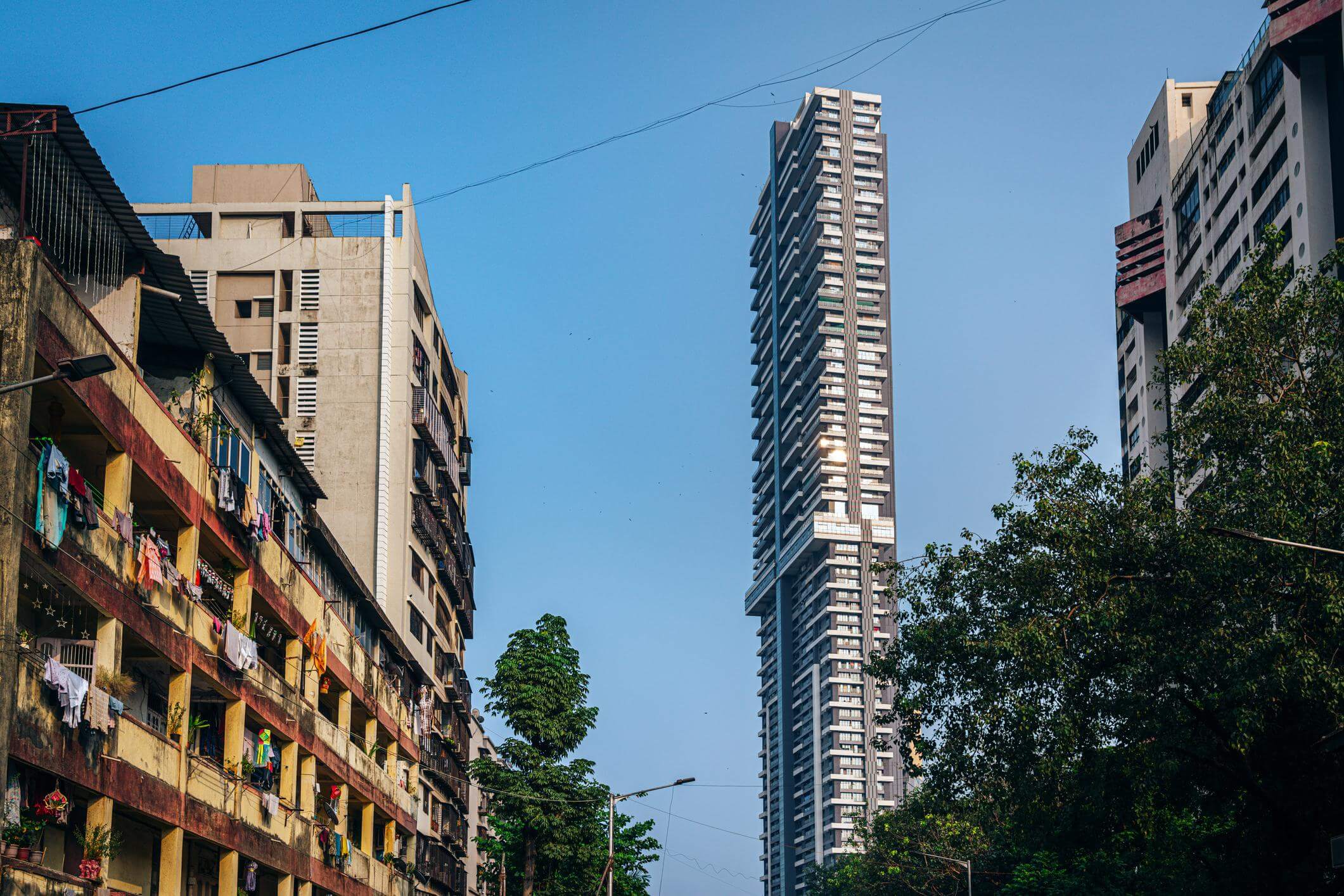
Mumbai’s redevelopment story is entering a decisive phase, where long-standing physical constraints are being redefined by policy intent. The civic body’s move to relax building height restrictions linked to road width under DCPR 2034 is not just a regulatory adjustment—it is a strategic shift that could reshape how the city grows, rebuilds, and utilises its limited land.
Until now, high-rise developments were largely restricted to plots facing roads at least 9 metres wide — a norm designed to ensure smooth access for emergency services like fire engines and ambulances. The proposed amendment challenges this threshold, allowing even plots on narrower roads to qualify for vertical development under a graded system.
Under the revised framework, permissible building heights will now be aligned with road width in a calibrated manner. Structures along 3.6-metre-wide roads could rise up to 32 metres (around 10 floors), those on 4.5-metre roads up to 70 metres (21–23 floors), and developments on 6-metre roads up to 120 metres (31–32 storeys). Roads measuring 9 metres and above will continue to allow buildings exceeding 120 metres.
This recalibration is expected to unlock redevelopment potential across several dense and previously constrained pockets of Mumbai. A large portion of the city’s housing stock — particularly in older suburbs and gaothan areas — has remained stuck due to limited access width, despite urgent need for renewal.
According to civic data, over 40,000 buildings in Mumbai are more than 30 years old, with several in South Mumbai dating back 70–80 years. Many of these structures have faced redevelopment delays solely because they fall on narrow access roads. The amendment could change that trajectory.
At the same time, regulatory safeguards remain in place. All such projects will require a no-objection certificate from the fire brigade, while high-rise developments must secure clearance from the high-rise committee. As one official stated, “NOCs will be granted only after all mandatory fire safety norms are met.”
Urban planners and experts, however, have raised valid concerns. Increased vertical growth in already congested areas may intensify pressure on infrastructure, worsen traffic conditions, and complicate emergency response mechanisms. As town planner Pankaj Joshi noted, “Building height should increase only when adequate access is available for emergency services during disasters.” He further added, “There is also a Supreme Court judgment on the need for sufficient approach roads.”
From a market perspective, the move is being seen as a catalyst. Anuj Puri, chairman of ANAROCK Group, observed, “This policy opens up significant residential potential and can accelerate redevelopment.” However, he also cautioned that “At the same time, it raises concerns about infrastructure pressure and legal issues related to access.”
Developers view this as a long-awaited opportunity. The change is expected to revive redevelopment in ageing buildings located on narrow lanes, where projects had stalled due to restrictive frontage norms. Industry stakeholders believe the policy will particularly benefit residents of old and dilapidated structures in densely populated neighbourhoods.
The broader impact could be transformative. From island city clusters to suburban belts, Mumbai may witness a visible shift in its skyline — with high-rises emerging in pockets once considered unsuitable for vertical growth.
Insight
Mumbai’s decision to allow taller buildings on narrower roads is not just a regulatory shift—it is a defining moment in the city’s redevelopment journey. While it unlocks long-stalled potential and offers relief to thousands living in ageing structures, it also places a greater responsibility on planning, infrastructure, and governance.
The real test will not be in how many towers rise, but in how well the city supports them. Without parallel upgrades in roads, emergency access, and civic infrastructure, vertical growth risks becoming vertical stress.
This policy has the power to transform Mumbai—but only if growth is matched with foresight.
By Sana Khan
Executive Editor, Realty Quarter
Mumbai





Our Esteem Clients:



























































Channel Partner Associations:





















Our Partners:


















Our Supporters: