

Trending now
BMC tightens construction waste tracking in Mumbai
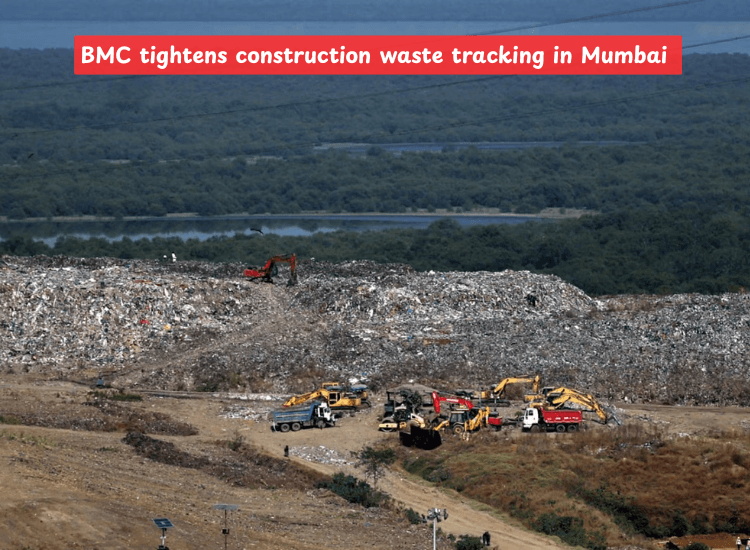
Mumbai’s fast-paced redevelopment has brought construction and demolition (C&D) waste into sharper focus, prompting the civic body to introduce a more disciplined and accountable system.
In response, a structured Standard Operating Procedure (SOP) has been implemented to regulate waste management across projects, making segregation at source and real-time tracking of waste movement mandatory.
Clear segregation and strict accountability
Under the new framework, waste must be divided into two defined categories—excavation material such as soil, murum (fragmented rock material), and earth, and construction debris generated from demolition and building activities.
Mixing of these categories has been strictly prohibited, placing complete responsibility on the waste generator. Non-compliance will attract penalties of up to Rs 25,000 per vehicle per instance, along with stricter action for repeat violations.
Real-time monitoring of waste transport
To ensure transparency, all transporters handling C&D waste are now required to install vehicle tracking and monitoring systems (VTMS). This enables authorities to track waste movement from its point of origin to final disposal.
Vehicles without active tracking devices will be considered non-compliant and will be denied access to disposal facilities—closing key gaps that previously enabled illegal dumping.
Mandatory waste management planning
Every project, including those processed through the civic body’s AutoDCR system, must now submit a detailed Waste Management Plan (WMP). This plan will outline the quantity of excavation, demolition, and construction waste generated.
Disposal will only be permitted at authorised recycling facilities or designated locations such as Deonar, while transportation of such waste outside city limits has been prohibited.
Infrastructure capacity and financial safeguards
Mumbai currently operates two civic-owned recycling plants located in Dahisar and Shilphata, with a combined processing capacity of 1,200 ton per day. Developers and contractors are required to register with these facilities to ensure compliance.
For large infrastructure and government projects, authorities have mandated a security deposit or bank guarantee—whichever is higher—of Rs 25 lakh or 0.1% of the project cost. This amount will only be released upon verified proof of proper waste disposal.
Streamlined operations and digital systems
To improve efficiency, the civic body has standardised charges for collection, transportation, and processing of debris. A digital consent system has also been introduced for disposal site access, ensuring better control and transparency.
At the same time, smaller waste generators will continue to be serviced under the existing “debris on call” system.
Promoting reuse and circular economy
The policy also encourages reuse of excavation material within city projects to minimise dumping and promote a circular economy. Material stored at sites such as Deonar will be repurposed for backfilling and infrastructure works.
With over 2,000 ongoing construction projects in Mumbai, this initiative aims to address systemic gaps, curb illegal dumping, and ensure scientific handling of construction waste at scale.
Insights
This policy is not just about waste management—it signals a deeper shift towards control, accountability, and transparency in a rapidly expanding real estate ecosystem.
For developers, it replaces operational flexibility with structured compliance. For the city, it lays the foundation for more disciplined and responsible urban growth.
The real test, however, lies in execution—because policies may define intent, but enforcement defines impact.
By Sana Khan
Executive Editor, Realty Quarter
Mumbai







Our Esteem Clients:



























































Channel Partner Associations:





















Our Partners:


















Our Supporters: