

Trending now
Deonar Land Unlock Could Give Fresh Momentum to Dharavi Redevelopment
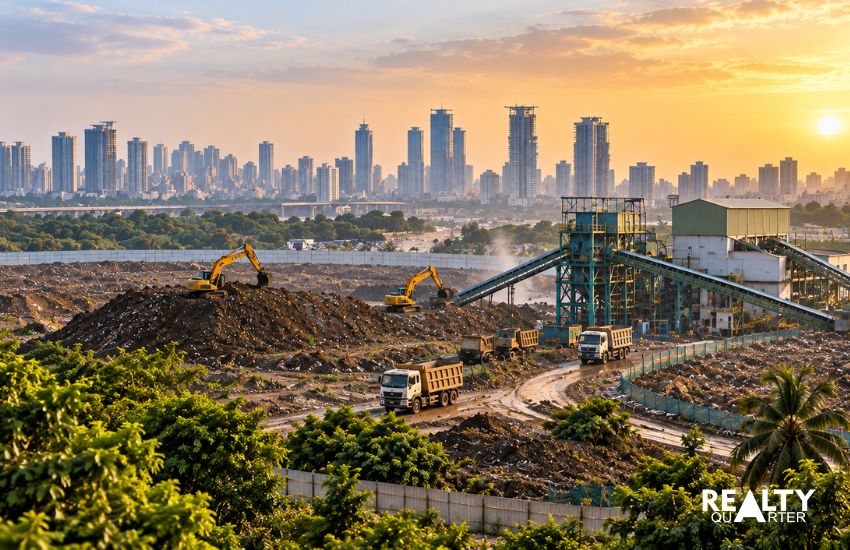
Mumbai: The proposed reclamation of land at Mumbai’s Deonar dumping ground is emerging as an important enabling step for the city’s large-scale redevelopment pipeline, with around 124 acres identified for rehabilitation housing linked to the Dharavi Redevelopment Project.
The Brihanmumbai Municipal Corporation (BMC) has begun trial operations under its ₹2,537-crore bioremediation programme to process legacy waste at the dumping ground. The exercise is expected to assess the operational process before full-scale waste removal begins.
While three of the five required permissions have been secured, approvals from the Bombay High Court and central environmental authorities are still required for transportation of the processed waste.
From a real-estate perspective, the significance of the exercise extends beyond environmental remediation. Land availability is one of the critical factors in executing Mumbai’s rehabilitation-led redevelopment projects. The proposed use of the Deonar parcel for rehabilitation housing could provide additional land capacity for the Dharavi transformation programme.
The development also highlights an increasingly important feature of Mumbai’s real-estate market: redevelopment is increasingly dependent on unlocking existing or underutilised land parcels rather than relying solely on new land acquisition.
For the Dharavi project, rehabilitation housing is a crucial component of the redevelopment framework. The availability of a designated land parcel could help address part of this requirement and potentially support the sequencing of construction and rehabilitation activities.
However, the immediate priority remains regulatory clearance and large-scale waste removal. Until the remaining approvals are obtained and the site is cleared, the land cannot move into its proposed redevelopment use.
Industry observers are likely to watch the next phase closely, as the successful reclamation of the Deonar parcel could demonstrate how environmental remediation can simultaneously create usable land for Mumbai’s housing and redevelopment requirements.
The project therefore represents more than a waste-management exercise—it could become an important land-unlocking initiative for Mumbai’s redevelopment ecosystem, provided the remaining approvals and execution milestones are achieved.
Tags: #Mumbai Real Estate, 124 acres Deonar, BMC Deonar project, BMC land, Deonar bioremediation programme, Deonar dumping ground, Deonar land reclamation, Deonar waste removal, Dharavi housing rehabilitation, Dharavi Redevelopment, Dharavi Redevelopment Project, environmental remediation, land unlocking Mumbai, Mumbai land reclamation, Mumbai property development, Mumbai redevelopment projects, Mumbai rehabilitation housing, Mumbai Urban Development, redevelopment Mumbai, rehabilitation housing Dharavi, underutilised land Mumbai, ₹2537 crore bioremediation







Our Esteem Clients:

























































Channel Partner Associations:





















Our Partners:

















Our Supporters: