
Trending now
Salt Pan Redevelopment Plan Sparks Fresh Debate in Mumbai
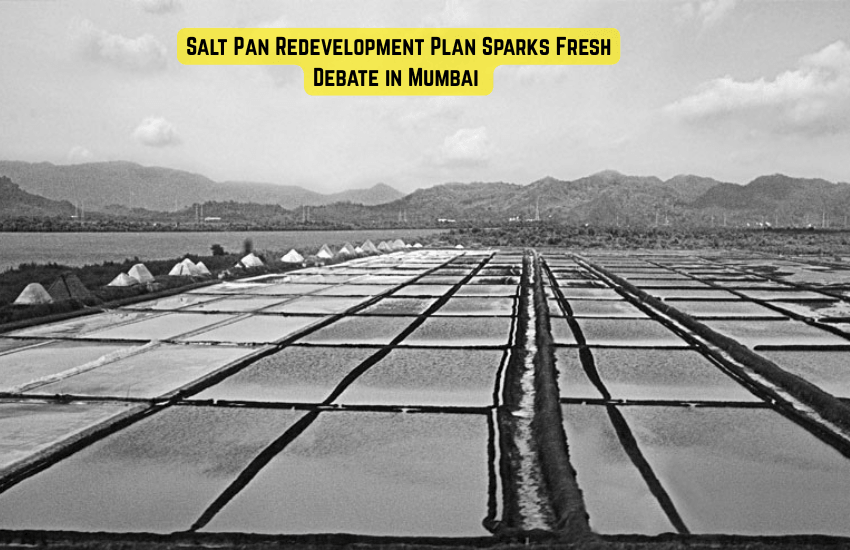
Mumbai’s redevelopment landscape is witnessing another major transformation as Navbharat Mega Developers Private Limited has submitted a proposal for the development of Mulund, Bhandup and Kanjurmarg salt pan lands under the Dharavi Redevelopment Project (DRP). The proposal introduces a combination of rehabilitation housing, free-sale residential towers and commercial development, triggering discussions around urban expansion, infrastructure pressure and sustainable planning.
According to the submitted development proposal, the Mulund salt pan parcel is expected to accommodate one commercial tower along with 18 free-sale buildings, each planned at approximately 180 metres in height. The proposal also includes rehabilitation towers for eligible Dharavi residents.
Navbharat Mega Developers is the Special Purpose Vehicle (SPV) executing the nearly ₹20,000-crore Dharavi Redevelopment Project. The Adani Group currently holds an 80 per cent stake in the company, which was previously known as Dharavi Redevelopment Project Private Limited.
Official records indicate that around 256 acres of salt pan land have been earmarked for the redevelopment exercise. This includes approximately 120.5 acres in Kanjurmarg, 76.9 acres in Bhandup and 58.5 acres in Mulund. The state government has already approved the construction of commercial and free-sale towers on the Kanjurmarg and Bhandup salt pan lands as part of the broader redevelopment framework.
What makes this proposal particularly significant is the growing shift in Mumbai’s redevelopment model. Projects that initially focused only on rehabilitation are now increasingly incorporating commercial and market-sale components to improve financial feasibility and large-scale urban integration. However, the proposal has simultaneously raised concerns among local residents, activists and urban observers regarding environmental impact and infrastructure capacity.
Local activist Sagar Devre criticised the inclusion of commercial structures and said, “There is no transparency in this project. First, we came to know that there will be residential buildings. Around 1.5 lakh residents of Dharavi will be rehabilitated here. We were against this sudden rise of population, which will put burden on the local infrastructure. Now we are told there will be 18 high-rise buildings for sale and one high-rise commercial building.”
Another resident stated, “We are not against people; we are against blind development. This development will hit our infrastructure, including roads and water.”
The concerns largely revolve around the carrying capacity of suburban infrastructure, especially in areas already facing traffic congestion, water supply stress and pressure on civic amenities. Environmental experts have also repeatedly highlighted the ecological sensitivity of salt pan lands, making large-scale vertical development a subject of continued public scrutiny.
At the same time, supporters of the project argue that Mumbai requires integrated redevelopment models capable of addressing both housing shortages and financial sustainability. With limited land availability in the city, redevelopment authorities and developers are increasingly relying on mixed-use planning to support large rehabilitation commitments.
In addition to the salt pan redevelopment proposal, the government has also transferred the 21-acre former Mother Dairy plot located at Nehru Nagar in Kurla (East) for the rehabilitation of non-eligible slum dwellers linked to the project. DRP officials, meanwhile, stated that additional details regarding the commercial proposal would be required before offering further comments.
The proposed salt pan development marks a defining moment in Mumbai’s evolving urban story. Beyond rehabilitation, the project reflects how redevelopment today is closely connected with commercial viability, city expansion and long-term economic planning.
Closing Insights
The redevelopment of Mumbai’s salt pan lands highlights the changing nature of urban transformation in the city, where rehabilitation projects are increasingly being integrated with commercial and free-sale developments to support large-scale financial viability. While the Dharavi Redevelopment Project represents one of India’s most ambitious redevelopment exercises, it has also intensified conversations around infrastructure preparedness, ecological impact and planning transparency.
The inclusion of high-rise commercial and residential structures on environmentally sensitive salt pan lands has sparked concerns among local residents and activists over additional pressure on roads, water supply and civic amenities. Simultaneously, urban planners and redevelopment supporters argue that integrated development models are essential for addressing Mumbai’s growing housing demand and limited land availability.
As Mumbai continues its vertical expansion, the challenge will lie in balancing growth with sustainability and infrastructure resilience. The long-term success of such mega redevelopment projects will ultimately depend not only on investment and construction scale, but also on how effectively they create a sustainable, inclusive and future-ready urban environment for the city and its residents.
By Sana Khan
Executive Editor, Realty Quarter
Mumbai



Our Esteem Clients:












Channel Partner Associations:

Our Partners:




Our Supporters: