

Trending now
Mumbai’s Next Big Infrastructure Leap May Be The Vasai Link
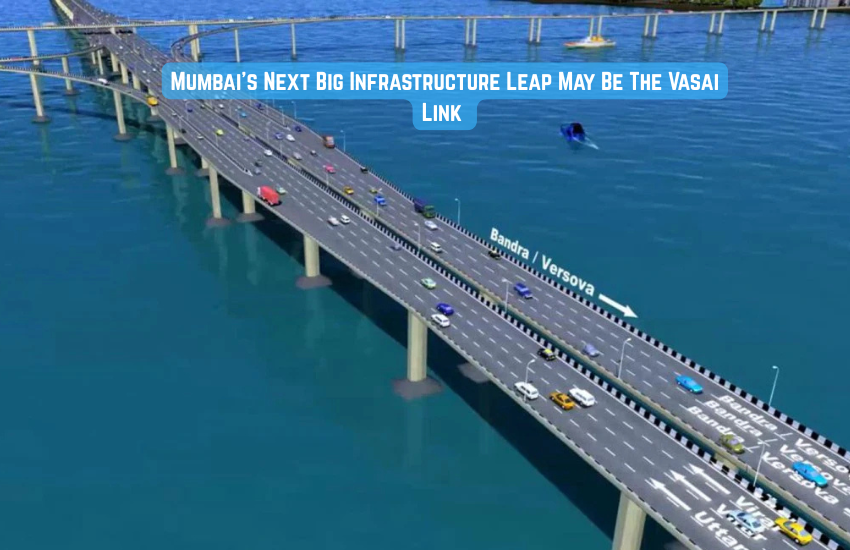
Mumbai’s northern corridor could be on the verge of a major transformation as the long-pending Vasai-Bhayandar bridge project regains momentum. With urban expansion rapidly shifting beyond traditional city limits, the proposed infrastructure link is being viewed not merely as a transport project, but as a strategic development initiative that could reshape connectivity, mobility, and real estate growth across the Mumbai Metropolitan Region.
The Mumbai Metropolitan Region Development Authority (MMRDA) has submitted a renewed proposal for the Rs 2,500 crore double-deck bridge to the state urban development department. The project, originally conceptualised in 2000 and approved by the state government in 2013, aims to establish a direct connection across the Vasai creek.
If executed as planned, the bridge could reduce the existing 39-km travel stretch — which currently takes nearly 90 minutes — to a direct 5-km route with an estimated travel time of just 10 minutes. The project is expected to significantly improve accessibility between Vasai and Bhayandar while reducing pressure on existing transport corridors.
One of the project’s most notable features is its integrated infrastructure design. The upper deck has been proposed for vehicular movement, while the lower deck is planned to accommodate Metro Line 13. The inclusion of both road and metro connectivity reflects the increasing focus on multi-modal transportation systems within rapidly growing urban regions.
The project is expected to provide major relief to nearly 1.8 million residents living across the Vasai-Virar belt, where traffic congestion and limited connectivity continue to affect daily commuting patterns. Improved infrastructure connectivity could also accelerate residential demand, commercial activity, and land appreciation in nearby micro-markets over the coming years.
Industry observers believe that large-scale connectivity projects often become long-term catalysts for regional economic growth. In infrastructure-led markets, improved mobility has historically influenced property absorption, investor confidence, and the pace of urban development.
As per available details, three out of the five required approvals have already been obtained from the Maharashtra Maritime Board, the Inland Waterways Authority of India, and the Maharashtra Coastal Zone Management Authority. However, certain challenges remain unresolved, particularly environmental clearances and compensation claims linked to salt pan land occupants.
Compensation-related concerns involving ten families comprising 119 individuals are reportedly pending before the Bombay High Court since 2013. In addition, land adjustments associated with mangrove acquisition are also under consideration, with an equivalent 4.44-hectare parcel in Dahanu taluka proposed as part of the environmental mitigation process.
“The proposed bridge will serve as a direct link between Mumbai and Vasai, as well as Gujarat, because the present NH-48 cannot handle the current traffic and is congested. Currently, there is no direct road link between Vasai and Bhayander; both towns are directly connected only by a railway line,” said Vasai-Virar Mayor Ajiv Patil.
According to the proposed alignment, the bridge is expected to begin near Netaji Subhash Chandra ground at Murdha Gaon, pass through salt pan land and Panju island, cross the Vasai creek, and terminate at Coutinho Road in Naigaon.
Insights
The proposed Vasai-Bhayandar bridge represents more than an infrastructure expansion — it signals a broader shift in Mumbai’s long-term urban planning strategy. As population growth and housing demand continue moving toward peripheral regions, connectivity-driven development is likely to play a defining role in shaping the next phase of metropolitan growth.
While regulatory approvals, environmental concerns, and land-related matters remain critical hurdles, the project’s long-term impact on mobility, economic activity, and regional development could be substantial if implemented effectively. For Mumbai’s northern suburbs, the bridge may eventually emerge not only as a transport corridor, but as a defining catalyst for future urban transformation.
By Sana khan
Executive Editor, Realty Quarter
Mumbai






Our Esteem Clients:























































Channel Partner Associations:




















Our Partners:


















Our Supporters: