
Trending now
Balancing Shelter and Open Spaces: Supreme Court Reviews Slum Rehabilitation Policy
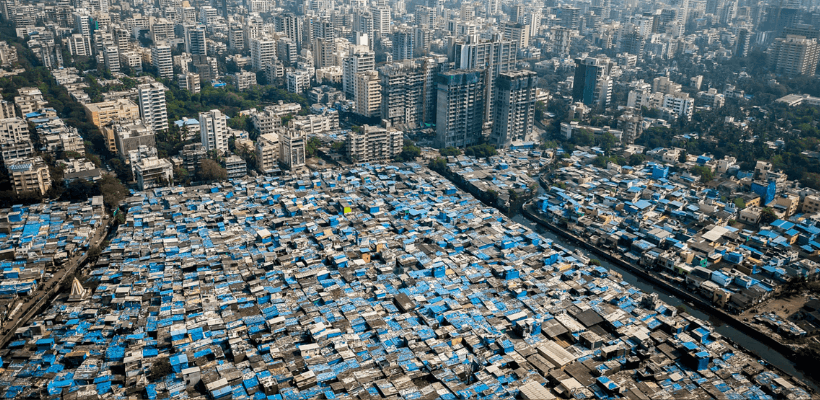
In a development that could influence Mumbai’s future urban landscape, the Supreme Court has sought responses from the Maharashtra government and civic authorities on a challenge to the Bombay High Court’s decision permitting slum rehabilitation on land originally reserved for parks, gardens, and playgrounds.
The dispute revolves around Regulation 17(3)(D)(2) of the Development Control and Promotion Regulations (DCPR) 2034, which allows rehabilitation projects on reserved open spaces provided a portion of the land is restored for public access. Critics argue this threatens the city’s already shrinking green areas, while supporters view it as a practical response to housing realities.
The Bombay High Court had earlier upheld the regulation, observing that many reserved plots are already fully occupied by informal settlements and remain unusable to citizens. Redevelopment, the court reasoned, could improve living conditions while simultaneously returning part of the land to public use.
Petitioners, however, argue that allowing construction on up to 65 per cent of reserved land effectively legitimizes encroachments and weakens safeguards under the “Public Trust Doctrine.” They stress that Mumbai’s per capita open space remains alarmingly low — often less than one square metre per person in several localities.
Rejecting claims that the policy is a “reward for encroachment,” the High Court said the regulation creates a “constitutional equilibrium.” It emphasized that environmental protection cannot be pursued at the cost of basic housing rights, stating:
“The Constitution does not ask us to protect the environment by ignoring other rights, but to protect the environment alongside those rights (the right to shelter), in a way that respects both nature and human dignity.”
The court described the 65:35 arrangement where 35 per cent of land becomes public open space while 65 per cent accommodates rehabilitation housing as a proportionate solution within current urban constraints.
To prevent open spaces from becoming token allocations, the court laid down strict safeguards. Open areas must remain in a single continuous stretch rather than fragmented pieces, remain open to all citizens, and cannot be restricted to residents of rehabilitation buildings.
Developers are also required to create functional amenities such as jogging tracks, landscaping, and play equipment before handing these areas over to the Municipal Corporation of Greater Mumbai (MCGM). Authorities have further been directed to ensure no fresh encroachments occur on reserved lands after notification.
The legal challenge itself dates back to 2002, when policies permitting redevelopment on lands encroached beyond 25 per cent were first contested. The ongoing litigation reflects Mumbai’s long-standing struggle to reconcile land scarcity with the urgent need for affordable housing.
Why this matters for Mumbai now
For a city already battling infrastructure stress and vanishing public spaces, the outcome of this case could redefine redevelopment strategies. The decision will influence not only slum rehabilitation models but also how future planning policies balance environment, housing demand, and public amenities.
The real challenge now lies not in policy drafting but in execution. Without strict monitoring, reclaimed open spaces risk becoming inaccessible or poorly maintained. Transparent implementation and civic accountability will determine whether redevelopment creates livable communities or simply reduces precious urban breathing spaces.
As the Supreme Court reviews the matter, Mumbai watches closely. The verdict will decide whether redevelopment can genuinely expand public amenities while providing dignified housing or whether the city risks losing what little open space remains.
By Sana Khan
Executive Editor, Realty Quarter
Mumbai





Our Esteem Clients:



























































Channel Partner Associations:





















Our Partners:


















Our Supporters: