
Trending now
Dharavi Redevelopment Speeds Up Before Rains
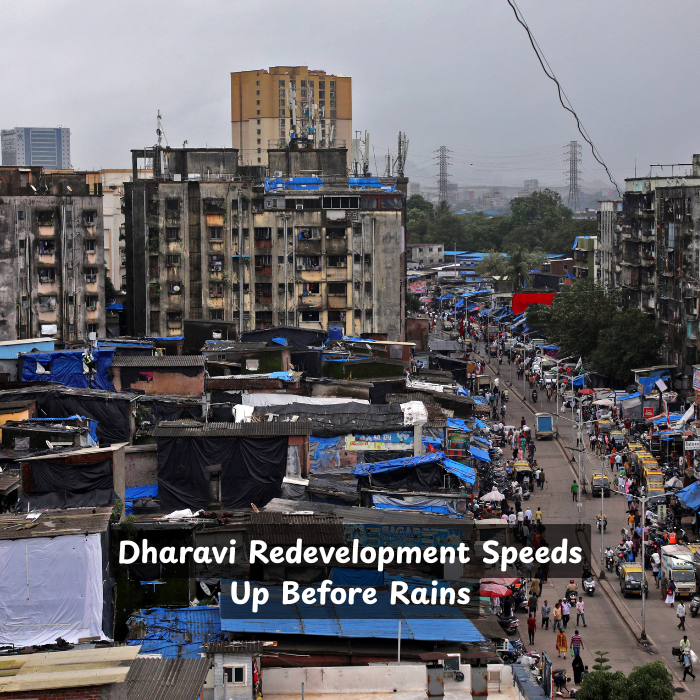
Mumbai’s urban transformation narrative has taken a decisive turn as authorities move forward with pre-monsoon clearances in key informal settlements. The latest development in Dharavi’s Sector 6 signals both urgency and complexity in executing one of Asia’s most ambitious redevelopment projects.
Nearly seven slum settlements in Sector 6 have been served notices to vacate either before the monsoon or prior to the commencement of the next academic year. The land, situated on Matunga railway premises, has been earmarked for rehabilitation under the Dharavi Redevelopment Project (DRP). Approximately 3,500 households are expected to relocate, enabling the construction of 10 rehabilitation buildings designed to accommodate around 11,000 families.
From an execution standpoint, authorities emphasize that timely cooperation will ensure smoother project initiation and minimize disruption in surrounding areas. However, on-ground sentiment reflects a contrasting narrative.
Baburao Mane, convenor of Dharavi Bachao Andolan, described the situation as an “atmosphere of fear.” He stated, “We were promised it would be key to key and people will move straight from current homes into new flats. Now they (DRP officials) are making all kinds of promises to chawl committee members, but there is nothing in agreement. No agreement is signed informing people when and where they will be given a flat.”
Residents who have received notices are reportedly being offered a rental support of Rs 30-35,000 for the initial three months. Mane further questioned the lack of clarity, adding, “But there is silence on what happens thereafter.”
Officials, however, maintain that the decision is driven by planning constraints. According to DRP authorities, the railway land was integrated into the Dharavi notified area under the assumption of vacant availability to facilitate rehabilitation construction. They clarified that the presence of existing settlements leaves “no alternative but to ask residents to vacate so construction can start.”
The situation is further complicated by scale and eligibility concerns. Sector 6 alone reportedly houses around 22,000 households, with a significant portion either deemed ineligible or still awaiting eligibility determination. Mane noted that over 200 mohalla committees and local representatives are mobilizing, with plans to organize a large-scale protest against the redevelopment process.
Insight
This development underscores a critical inflection point in Mumbai’s redevelopment ecosystem—where policy intent meets ground reality. While the scale of rehabilitation—10 buildings for 11,000 families—reflects ambition, the transition mechanism remains the real test.
The success of the Dharavi Redevelopment Project will not be measured merely by construction milestones, but by the credibility of its rehabilitation framework. Transparency in agreements, continuity in rental support, and clarity on eligibility will define stakeholder trust.
As Mumbai continues to evolve, the balance between speed of development and social equity will determine whether such projects become models of transformation—or case studies in displacement.
By Sana Khan
Executive Editor, Realty Quarter
Mumbai





Our Esteem Clients:























































Channel Partner Associations:




















Our Partners:


















Our Supporters: