
Trending now
India’s Housing Market Maintains Momentum in H1 2026
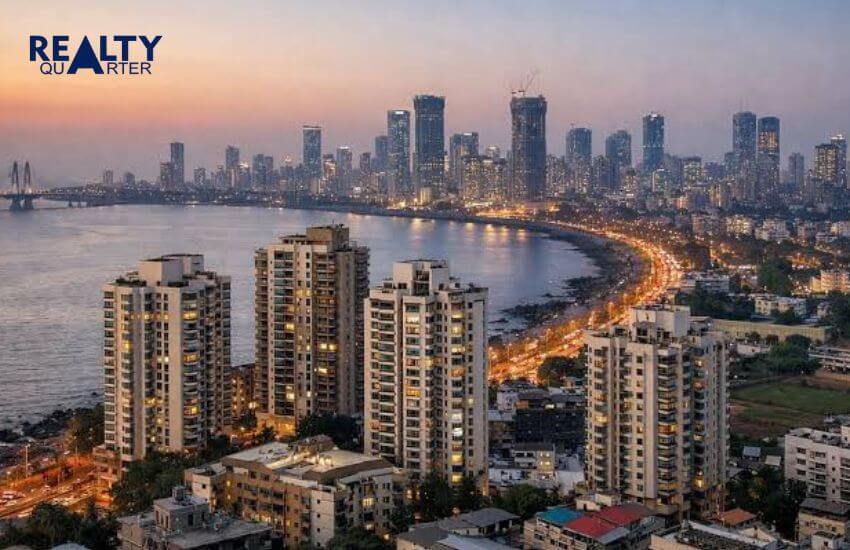
India’s residential real estate sector continued to demonstrate resilience in the first half of 2026, with the country’s eight largest housing markets collectively recording sales of 1,71,471 units, marking a one per cent year-on-year increase, according to a report by Knight Frank India. During the same period, new launches rose by four per cent to 1,87,350 units, reflecting sustained developer confidence despite signs of market consolidation.
The latest data suggests that after four years of post-pandemic recovery, the residential market is entering a more mature phase, characterised by stable demand, selective buying patterns and a growing preference for premium housing.
Market Enters a Consolidation Phase
Knight Frank noted that the housing sector has moved into a period of late-cycle consolidation after recovering from the slowdown witnessed in 2020. While overall sales growth remained modest, developers continued to introduce fresh inventory across major cities.
For the entire calendar year 2025, residential sales stood at 3,48,207 units, marginally lower than the previous year, indicating that the market is now transitioning from rapid expansion to steady growth.
Mumbai Retains Leadership Position
Mumbai remained India’s largest residential market, recording sales of 47,355 units during H1 2026, reflecting a one per cent year-on-year increase. Bengaluru emerged as the fastest-growing market among the top eight cities, registering a five per cent growth with 27,968 units sold.
Pune reported sales of 24,890 units, up two per cent, while the National Capital Region (NCR) witnessed a seven per cent decline, with sales falling to 24,862 units. Hyderabad recorded 19,249 units, reflecting a one per cent increase.
Ahmedabad sold 9,581 units, Chennai 9,198 units, and Kolkata 8,368 units, with all three cities posting growth of two to three per cent.
Supply Continues to Outpace Demand
On the supply side, Pune led new launches with a 17 per cent year-on-year increase, followed by Mumbai, which recorded an eight per cent rise. In contrast, NCR and Kolkata witnessed a five per cent decline in launches, while Hyderabad saw a two per cent fall.
The continued expansion in supply has widened the gap between launches and sales. During H1 2026, developers introduced 15,879 more units than were absorbed by the market, raising concerns about inventory accumulation if the trend persists in the second half of the year.
Unsold Inventory Inches Higher
Unsold inventory across the eight major markets increased by four per cent year-on-year to 5,25,695 units at the end of H1 2026. The overall quarters-to-sell ratio also rose to six quarters, compared to 5.8 quarters at the end of 2025.
Mumbai accounted for the largest unsold stock at 1,57,410 units, followed by NCR with 1,03,984 units and Bengaluru with 74,299 units.
Among the cities analysed, Ahmedabad recorded the highest quarters-to-sell ratio at 8.1 quarters, followed by NCR at 7.9 quarters and Mumbai at 6.5 quarters. Chennai and Kolkata reported the lowest ratio at 4.4 quarters each.
Premium Housing Strengthens Its Share
One of the most significant trends highlighted in the report is the growing dominance of premium housing. Homes priced above ₹1 crore accounted for 54 per cent of total sales in H1 2026, up from 49 per cent in H1 2025.
Knight Frank attributed this shift to sustained price appreciation and rising demand for larger, premium homes. The ₹2 crore–₹5 crore segment recorded a 43 per cent year-on-year increase in unsold inventory, reaching 65,671 units. Despite the increase, the segment contributed 20 per cent of overall sales and maintained a quarters-to-sell ratio of 4.4 quarters.
Meanwhile, affordable housing inventory below ₹50 lakh declined by seven per cent year-on-year to 1,71,363 units, while inventory in the ₹50 lakh–₹1 crore category fell by three per cent to 1,34,841 units.
Prices Continue to Rise Across Cities
Residential prices increased across all major markets during H1 2026. Faridabad and Delhi registered the highest annual appreciation of 18 per cent each, followed by Ghaziabad at 15 per cent, Bengaluru at nine per cent, Noida at eight per cent, and Hyderabad at seven per cent.
Gurugram and Greater Noida each recorded six per cent growth, while Mumbai, Pune, Chennai and Kolkata witnessed five per cent appreciation.
Closing Insight
India’s residential market appears to be entering a phase where growth is increasingly being driven by premium housing demand rather than mass-market expansion. While sales have remained stable and developers continue to launch new projects, the steady rise in inventory levels indicates that supply is beginning to outpace absorption in several cities.
The coming quarters will determine whether demand can keep pace with fresh launches or whether developers will need to recalibrate their strategies in an evolving housing landscape.
By Sana Khan
Executive Editor,
Realty Quarter – Mumbai






Our Esteem Clients:












































Channel Partner Associations:




















Our Partners:














Our Supporters: